

If you’ve ever wondered why one strain feels completely different from another, even when the THC percentage looks the same, the answer usually comes down to terpenes and cannabinoids. These are the two most important compound groups in cannabis, and understanding how they work together is the key to choosing better products and getting a more consistent experience.
What Are Terpenes
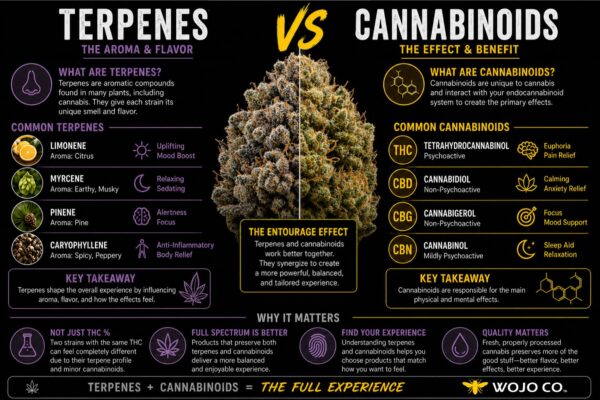
Terpenes are aromatic compounds found in cannabis and many other plants. They are responsible for the smell and flavor of different strains, but they also play a functional role in shaping how cannabis feels.
In nature, terpenes help protect plants from predators and environmental stress. In cannabis, they contribute to the overall sensory experience and can influence how cannabinoids behave in the body.
Common terpenes include limonene, which has a citrus aroma and is often associated with uplifting effects, myrcene, which is earthy and tends to feel more relaxing, pinene, which smells like pine and may promote alertness, and caryophyllene, which has a spicy profile and is unique because it can also interact with CB2 receptors.
Simple takeaway: terpenes influence the flavor, aroma, and feel of the experience.
What Are Cannabinoids
Cannabinoids are naturally occurring chemical compounds found in cannabis that directly interact with your body’s endocannabinoid system. This system plays a role in regulating mood, sleep, appetite, pain, and immune response.
There are over 100 known cannabinoids, but a few stand out. THC is the primary psychoactive compound responsible for the high most people associate with cannabis. CBD is non intoxicating and is commonly used for its calming and balancing properties. Other cannabinoids like CBG, CBN, and CBC are gaining attention for their potential roles in focus, sleep support, and overall wellness.
Cannabinoids bind to receptors in the body known as CB1 and CB2 receptors. CB1 receptors are primarily found in the brain and central nervous system, while CB2 receptors are more common in the immune system and peripheral organs.
Simple takeaway: cannabinoids are the compounds that create the core effects in your body.
Terpenes vs Cannabinoids: The Key Differences
Cannabinoids are responsible for the primary physical and mental effects, while terpenes shape how those effects are perceived. Cannabinoids are mostly unique to cannabis, while terpenes are found across many plants including fruits, herbs, and flowers. Some cannabinoids like THC are psychoactive, while terpenes are not intoxicating on their own. Cannabinoids directly bind to receptors in the body, while terpenes influence the overall experience and may modify how cannabinoids interact with those receptors.
Why THC Percentage Alone Doesn’t Tell the Full Story
Many consumers still rely on THC percentage as the main indicator of quality, but this is one of the biggest misconceptions in cannabis.
Two products with identical THC levels can produce completely different effects depending on their terpene profile and minor cannabinoid content. A terpene rich product often delivers a more dynamic and enjoyable experience than a higher THC product with weak terpene presence.
This is why full spectrum products tend to feel more balanced and effective.
The Entourage Effect Explained
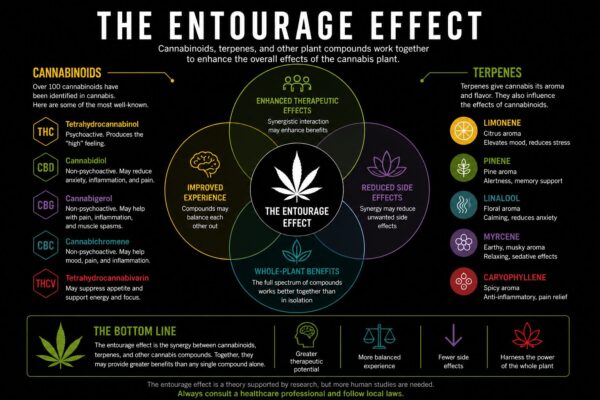
The entourage effect refers to the way cannabinoids and terpenes work together to create a more complete experience. Instead of acting independently, these compounds interact and enhance each other.
Cannabinoids provide the foundation of the effect, while terpenes fine tune how that effect feels. For example, a strain high in limonene may feel more uplifting, while one high in myrcene may feel more relaxing, even if the THC content is similar.
This synergy is one of the main reasons full spectrum cannabis products are preferred over isolated compounds.
Medical and Functional Perspective
From a medical standpoint, both cannabinoids and terpenes are being studied for their potential therapeutic benefits.
Cannabinoids like CBD and THC have been researched for pain management, inflammation, anxiety, and sleep disorders. Terpenes are also being explored for their potential roles in mood regulation, stress relief, and anti inflammatory effects.
While research is still evolving, the combination of cannabinoids and terpenes appears to offer more potential than either one alone.
Why This Matters When Choosing Cannabis
If you want a better experience, it is important to look beyond THC percentage and start paying attention to terpene profiles and overall product quality.
Flavor profiles like citrus, candy, floral, gassy, and funk can give you insight into terpene content and expected effects. Products made from fresh frozen material and processed in a way that preserves terpenes tend to deliver a more consistent and enjoyable experience.
Understanding this difference helps you choose products based on how you want to feel, not just how strong they are.
Terpenes and Cannabinoids in Premium Products
High quality cannabis products focus on preserving both cannabinoids and terpenes throughout the entire process.
Products like live rosin and properly handled vape pens maintain full spectrum profiles, meaning they retain the natural balance of cannabinoids and terpenes found in the plant. This leads to better flavor, smoother consumption, and a more complete effect.
Strain selection also plays a role, as different genetics naturally produce different terpene and cannabinoid combinations. Cannabinoids drive the primary effects while terpenes shape the experience around those effects. Both are essential, and understanding how they work together
allows you to make more informed decisions on your purchases. Once you move past THC percentage and start paying attention to terpene profiles and full spectrum quality, you will get more consistency and better results from your cannabis.
FAQ’s
What is the difference between terpenes and cannabinoids?
Cannabinoids create the main effects in the body, while terpenes influence flavor, aroma, and how those effects feel.
Do terpenes have medical benefits?
Some terpenes are being studied for potential benefits like stress relief, anti inflammatory properties, and mood support.
Why do strains with the same THC feel different?
Differences in terpene profiles and minor cannabinoids change how the effects are experienced.
What is the entourage effect?
It is the interaction between cannabinoids and terpenes that creates a more complete and balanced experience.
Are terpenes important in concentrates and vapes?
Yes, terpene preservation is one of the biggest indicators of product quality and overall experience.